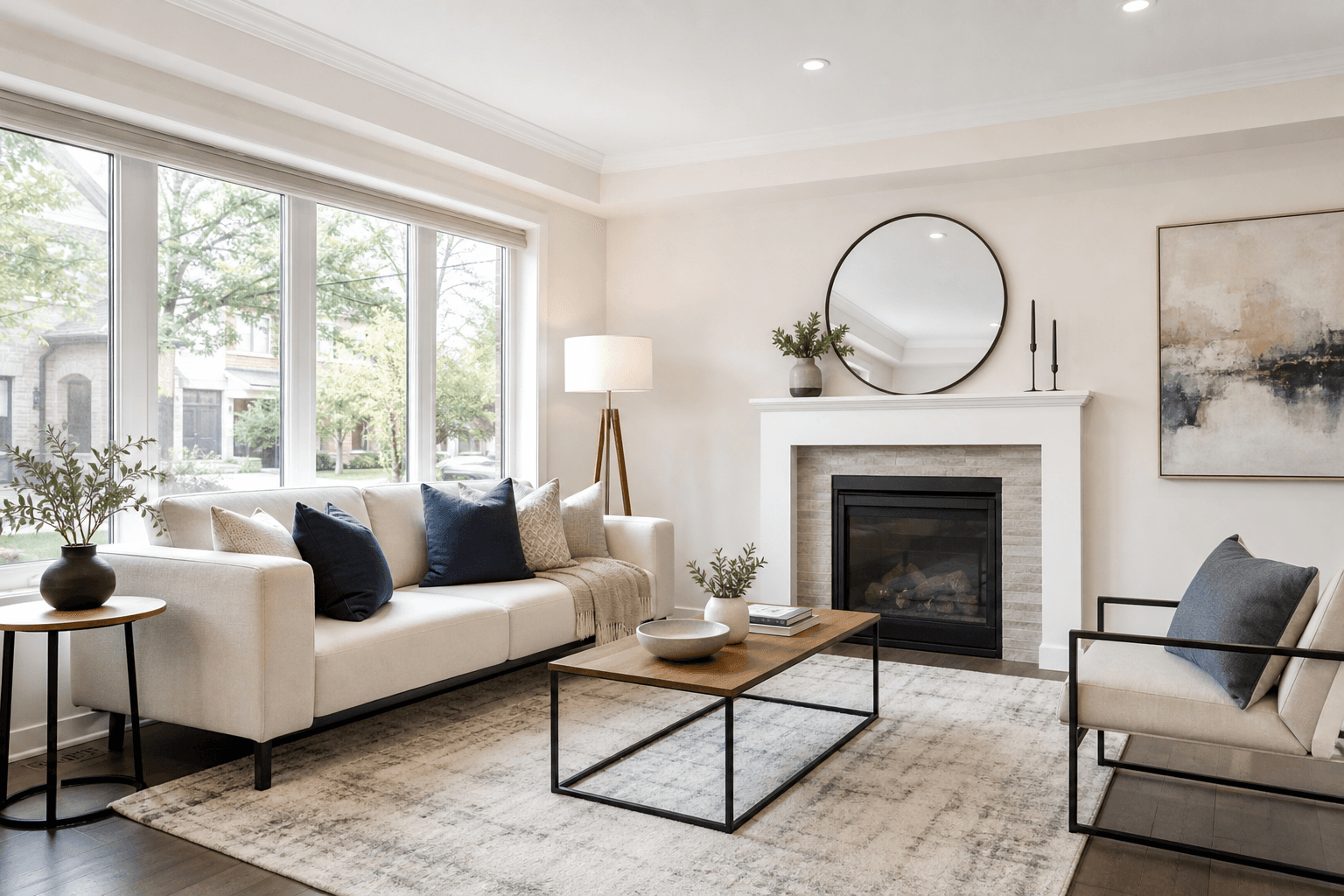
Use these seven staging tips to prepare your Mississauga home for sale, prioritize repairs, improve presentation, and get your listing ready without overspending.
Good staging is less about expensive decoration and more about helping buyers understand the property quickly. Before spending on major upgrades, focus on visible condition, cleanliness, space, light, room function, and accurate presentation.
These staging tips for sellers are designed for Mississauga and broader GTA homeowners preparing for listing photos, showings, and offer review. The aim is not to promise a specific price, faster sale, or number of offers. It is to help you decide which preparation work is essential, which improvements strengthen presentation, and which upgrades may be optional.
How to Prioritize Staging Before You Spend
Sort your preparation into three levels. Essential fixes include safety concerns, water or moisture issues, broken fixtures, damaged surfaces, strong odours, and defects a buyer is likely to notice immediately. Presentation improvements include decluttering, deep cleaning, arranging furniture, improving lighting, and refreshing tired but serviceable spaces. Optional upgrades include cosmetic renovations that may be attractive but are not necessary for the home to be understood accurately.
Weigh each decision against the property’s condition, your budget, your available time, and the questions a buyer is likely to ask. A condo may need careful attention to the unit, parking, locker, storage, and building-related information. A townhome or detached home may require more work across entrances, stairs, basements, yards, and exterior areas. No improvement should be treated as a guaranteed investment or substitute for accurate disclosure.
1. Strengthen the First Impression Before Buyers Look Closely

Start at the front entrance and follow the sightline a buyer is likely to take when entering. Remove shoes, bags, seasonal clutter, excess furniture, and anything that makes the doorway feel narrow. Clean the door, trim, floors, handles, and nearby surfaces. Replace a burned-out bulb and address obvious damage rather than trying to distract from it with decorations.
Odours also deserve attention. Clean the source of cooking, pet, smoke, or damp smells instead of masking them with heavily scented products. Check the entry, powder room, kitchen, and basement because these spaces can influence a buyer’s first impression of overall maintenance.
The goal is not to create a staged look that feels artificial. It is to give buyers a clean, calm starting point from which they can assess the home’s actual layout and condition.
2. Declutter to Make Space and Movement Easy to Understand
Remove items that block walkways, crowd rooms, or make storage areas difficult to inspect. In living rooms, keep enough furniture to show scale but remove pieces that interrupt movement. In bedrooms, make the bed the visual focus and reduce clothing, personal items, and furniture that make the room appear smaller.
Work through kitchens, bathrooms, closets, basements, garages, balconies, and laundry areas as well. Clear counters while leaving enough context for buyers to understand how the space functions. Organize closets without packing everything tightly into storage, since buyers need to see the available capacity.
For a condo, do not imply that limited in-unit storage is larger than it is. Present the locker, parking space, balcony, and amenities accurately. For a townhome or detached property, show how circulation works between floors and how storage, outdoor areas, and utility spaces are actually used.
3. Complete Visible Repairs Before Adding Cosmetic Upgrades
Walk through the property with a notepad and record loose handles, cracked switch plates, dripping taps, damaged doors, missing caulking, scuffed walls, stained grout, and non-functioning lights. Prioritize issues that affect safety, operation, cleanliness, or a buyer’s confidence in maintenance.
After essential repairs, consider modest refreshes such as touch-up painting, repairing worn trim, or replacing a visibly damaged fixture. Be cautious about taking on a large renovation simply because it sounds appealing. Its cost, timing, workmanship, and effect on the property may not justify the disruption.
Staging must never conceal a defect or replace appropriate disclosure. If you are uncertain about a structural, electrical, plumbing, environmental, legal, or building-related issue, ask an appropriately qualified professional how it should be assessed and documented before listing.
4. Improve Light and Prepare Every Room for Photography
Open blinds and curtains, clean windows, remove obstructions from windows, and make sure each light fixture works. Use consistent, suitable bulbs where possible, then check how rooms look at different times of day. Trim or move items that block natural light, but do not remove or misrepresent features that belong with the property.
Before photography, clear countertops, straighten bedding, put away cords, remove bins, and check mirrors and reflective surfaces for distracting marks. Make sure the room shown in person matches what the images communicate.
After the rooms are prepared, use MLS listing optimization to confirm that photos, feature details, captions, and property information accurately support the buyer’s first impression.
5. Give Each Room a Clear, Honest Purpose
Buyers should be able to tell whether a room is a bedroom, living area, dining space, office, recreation room, storage area, or utility space. Arrange furniture to demonstrate a plausible use while leaving enough open area to understand the room’s proportions.
Avoid filling an undefined area with random furniture or describing a space as something it cannot reasonably support. A basement, den, loft, balcony, or finished area may have useful possibilities, but its description should remain accurate and should not imply a legal bedroom, finished square footage, or separate living unit without verification.
In a condo, distinguish the unit from shared building spaces. Unit finishes, the locker, parking, amenities, maintenance-fee information, and building rules should be presented as separate details and confirmed before publication.
6. Extend the Presentation to the Entrance and Exterior
Presentation begins before the front door. Sweep paths, remove seasonal clutter, clean the porch or entry steps, trim overgrown plants where appropriate, and ensure exterior lighting works. Store bins, tools, toys, hoses, and outdoor equipment neatly. Check the condition of the front door, hardware, house numbers, mailbox, and visible trim.
For a detached home or townhome, make outdoor areas easy to understand without over-decorating them. A small seating arrangement may show how a patio or balcony can be used, but leave enough space for buyers to assess the actual dimensions and condition.
Condo sellers may have less control over a shared entrance, hallway, elevator, landscaping, or common amenity. Keep the unit presentation within your control and ensure marketing materials distinguish common areas from features included with the unit.
7. Finish With an Accurate Listing-Readiness Review
Before photos and showings, review the property as both a visitor and a listing editor. Confirm the address, property type, room count, approximate dimensions, lot information, parking, storage, taxes, maintenance fees, occupancy, upgrades, inclusions, exclusions, and showing instructions.
For a condo, check the unit’s parking and locker details, building amenities, fee information, and applicable building rules. For a house or townhome, review additions, finished areas, outdoor structures, rental items, and anything that will remain or be removed.
Also review every image and caption. Confirm that photos show the correct spaces and that personal documents, valuables, medication, keys, access codes, and identifying information have been removed or secured before photography and showings.
Pre-Listing Home Staging Checklist
- Repairs: Address visible damage, leaks, broken fixtures, loose hardware, non-functioning lights, and maintenance concerns that require professional assessment.
- Cleaning: Clean windows, floors, appliances, bathrooms, baseboards, entry areas, and high-touch surfaces. Remove odour sources.
- Decluttering: Reduce excess furniture, personal items, countertop contents, closet overflow, storage clutter, and outdoor equipment.
- Lighting: Open window coverings, clean glass, replace burned-out bulbs, and check that rooms are presentable in daylight and evening conditions.
- Privacy and security: Remove personal paperwork and valuables, secure medication and keys, and follow the agreed showing process.
- Exterior: Tidy the entrance, paths, balcony, patio, yard, or other areas within your control.
- Photos and listing facts: Confirm that images, captions, measurements, room descriptions, parking, storage, inclusions, exclusions, and building details are accurate.
When to Get Help Prioritizing Property Preparation
Consider a property-presentation discussion when you are unsure whether to repair, refresh, renovate, or simply remove belongings. It can also help when your budget is limited, your intended listing date is close, or several preparation tasks compete for attention.
Qasim Khan Real Estate provides Mississauga seller guidance around preparation, presentation, pricing conversations, marketing, and offer review. If you are unsure which improvements are worth making, discussing property presentation can help connect preparation decisions with the wider selling process.
FAQ About Staging a Home Before Sale
Should I renovate my Mississauga home before listing it?
Not automatically. Begin with essential repairs, cleaning, decluttering, and improvements that address visible condition or make the layout easier to understand. Consider a larger renovation only after weighing its cost, disruption, timing, workmanship, and relevance to the property.
How should staging differ between a condo and a detached home?
The basic principles are the same, but the focus changes. Condo sellers should present the unit clearly and verify parking, lockers, amenities, fees, and building information. Detached-home sellers may need to address more exterior areas, basements, storage, stairs, and outdoor structures.
What should sellers remove before listing photos?
Remove excess furniture, personal paperwork, valuables, medication, visible cords, overflowing bins, countertop clutter, laundry, and items that obstruct the room. Keep enough furniture to communicate scale and function.
Should I stage an empty home or leave it vacant?
An empty home can be clean and easy to access, but some rooms may be harder to interpret without scale or context. If furniture is used, it should fit the space and support an honest understanding of the layout.
How can I make sure staging does not misrepresent the property?
Use appropriately sized furniture, describe rooms and features accurately, avoid blocking defects, and verify measurements, upgrades, parking, storage, amenities, and inclusions. Staging should clarify what buyers can expect to see, not create an impression the property cannot support in person.
Conclusion: Stage for Clarity, Not Just Appearance
The strongest staging plan usually begins with condition, cleanliness, decluttering, light, and flow. From there, give each room an honest purpose, improve the entrance and exterior areas within your control, and complete a careful review of listing facts before photos and showings.
Use the three-level priority framework to protect your budget: complete essential repairs first, make practical presentation improvements next, and treat larger cosmetic upgrades as optional decisions that require careful assessment.
For preparation, presentation, marketing, and offer-review guidance in Mississauga and the GTA, contact Qasim Khan Real Estate to discuss your property and selling priorities.
Written by
Qasim Khan
Real Estate Professional, QASIM KHAN Real Estate